Sengukoi’s Risk Rules
Risk management is essential to succeed as a speculator.
Risk rules and Money Management
Each and every trade has the potential to end all your hard work of making profits.
Fear the market.
Your equity graph falls much faster than it rises. (Much like in a bear market where prices fall much faster than they rise)
Drawdown Circuits
After a drawdown of 12% = trade only high probability setups.
After a drawdown of 20% = stop trading for a month, consolidate your mind, are you physically and mentally okay? have you lost your discipline? have you been taking excessive risks? has there been a black swan event? back test the method, determine if the market environment has changed, reduce the account size to 25% of the pre drawdown period, regain confidence and get back to normalcy.
1) Trade threshold – At least 4% move in 4 days or more with an intermediate or high probability of success and a reward : risk of 2:1 or higher.
2) Maximum exposure (Exposure is defined as the maximum possible theoretical loss) is equal to 15%.
Note – Exposure is similar in concept to VaR but my interpretation is much stricter due to the tail risks (fat tails) involved. Exposure, for me, is calculated as
100% for equity,
Notional value for long futures, infinite for short futures,
Premium value for long options, infinite for short options, spread difference for options spread strategies.
3) In case of legging the spread – Always take the long side first and then the short side.
4) Stop loss risk is a maximum of 2% (for intermediate probability trades) and 3.5% (for high probability trades)
5) Reward : Risk is 2:1 or higher.
6) Only intermediate probability (3 Axis) and High probability (5 Axis) trades allowed.
7) Liquidity risk – Trade only highly liquid scrips which are easy to get in and out.
8) News Risk/Overnight Risk – As far as possible, trade low news risk securities especially the indices.
9) Read each order entry three times aloud before pushing the enter button.
10) Keep commissions/brokerage, spread, miscellaneous expenses (software, data, etc), taxes low.
11) Keep 25% of the trading capital with your broker, 25% in a AAA liquid savings account, 50% in a AAA fixed deposit in the bank.
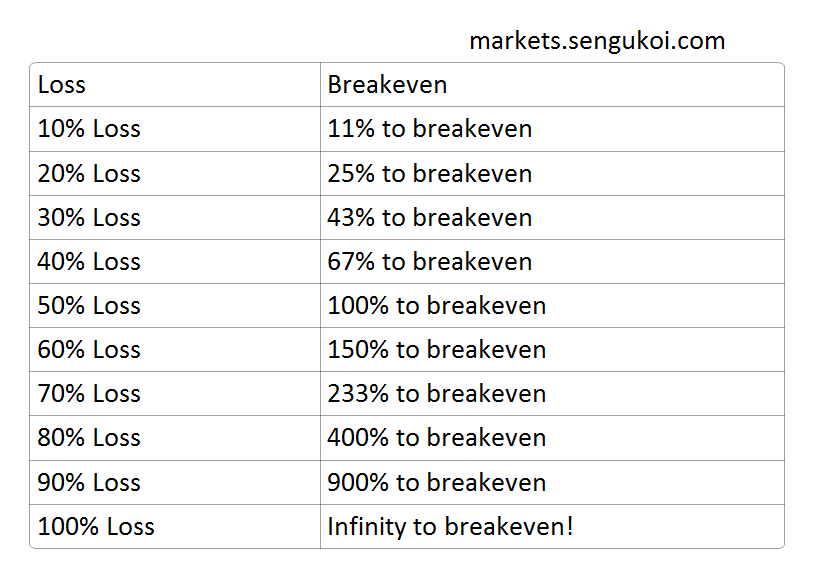
12) As the loss increases, it gets more and more harder to just breakeven